Triumph Street Triple 798 RS Launched at ₹14.39 Lakh: Price, Power and What Changed
Overview
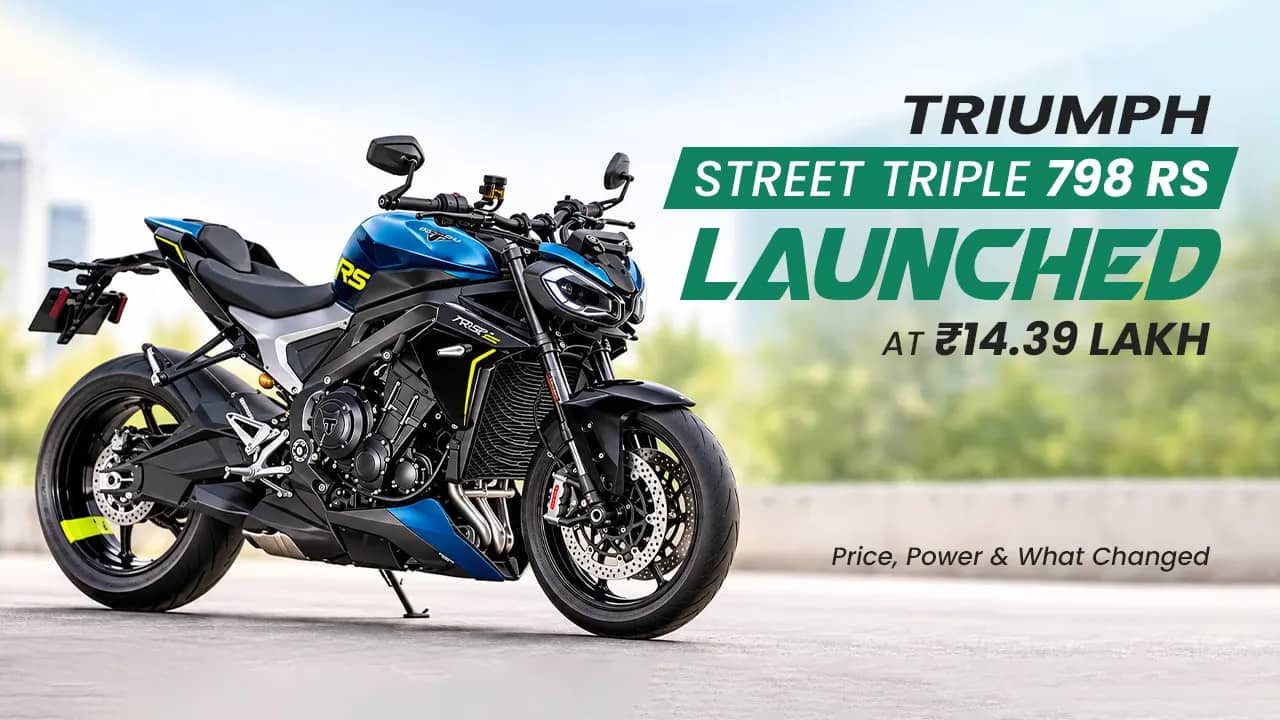
Triumph has listed the Street Triple 798 RS on its India website at ₹14.39 lakh ex-showroom, ₹1.2 lakh above the outgoing 765 RS. This report covers the new 798cc engine, the lighter chassis, expected Delhi on-road and EMI numbers, and how the bike compares with the Ducati Monster. It is written for Indian riders deciding whether to book now or hold out for deliveries.
The Triumph Street Triple 798 RS has been listed in India at ₹14.39 lakh (ex-showroom), ₹1.2 lakh more than the 765 RS it replaces. Triumph revealed the bike globally and updated its India website on the same day. There is no Indian delivery date yet, and global dealers are not due stock before February 2027. So this is a planning story, not a test-ride story. The real question is whether you park your booking money for the new bike or take a 765 RS now.
Triumph Street Triple 798 RS price in India and on-road cost
Nobody pays the ex-showroom figure. Registration, insurance and other charges push a Street Triple RS well past it. The outgoing 765 RS, at about ₹13.2 lakh ex-showroom, works out to roughly ₹14.8 lakh on the road in Delhi and about ₹16.1 lakh in Bangalore, going by current dealer-side listings. Apply the same ratio and the new bike likely lands near ₹16.1 to ₹16.3 lakh in Delhi and north of ₹17.5 lakh in Bangalore. Treat those as expected numbers. Triumph will lock city prices only when deliveries open.
What the EMI actually looks like
Take the standard Drivio setup: 20 per cent down, 60 months, 11 per cent interest, calculated on the ex-showroom price. That is a ₹2.88 lakh down payment and a loan of about ₹11.5 lakh. The EMI comes to roughly ₹25,000 a month, and you pay around ₹3.5 lakh in interest over five years. The catch is that the down payment does not cover on-road charges. Keep another ₹1.7 lakh or so aside for registration and insurance, which brings the cash needed on day one close to ₹4.6 lakh.
What changed: a bigger triple and a lighter frame
The engine grows from 765cc to 798cc. Output is 133bhp (135PS) at 11,500rpm and 86Nm at 9,250rpm, up 5bhp and 6Nm over the 765 RS. Triumph says torque is up about 10 per cent across the rev range, and credits its Moto2 engine programme for the work. A bi-directional quickshifter comes with the six-speed gearbox.
The bigger story is weight. A new aluminium frame, subframe and swingarm bring the wet weight down to 183kg, 5kg less than before. Run the numbers and power-to-weight climbs from about 0.68bhp per kg to 0.73. That is a gain of roughly 7 per cent, for a price increase of roughly 9 per cent.
Hardware and electronics that justify the premium
The suspension is fully adjustable: 41mm Showa Big Piston forks up front, an Öhlins STX46 monoshock at the rear. Tyres are Pirelli Diablo Supercorsa SP V3, which is serious track-day rubber. On Indian roads that cuts both ways. They grip superbly once warm, but a cold Delhi winter morning or a wet Mumbai commute will ask for patience.
The electronics now borrow from much bigger Triumphs. Cornering ABS and cornering traction control are standard, along with launch control, front wheel lift control and rear-wheel slide control. A 7-inch TFT brings wireless Apple CarPlay and Android Auto, which matters if you plan to use the bike as more than a weekend toy.
Street Triple 798 RS vs rivals: where the money goes
Triumph says the Street Triple RS has no direct rival at this price. The nearest alternative is the Ducati Monster, listed at around ₹14 lakh in India, though that figure needs confirming at a dealer. The Monster makes about 110bhp, so the Triumph wins on outright power and track hardware. Ducati counters with badge value and a more relaxed seating position, which counts for something on a 40km Gurugram-to-Delhi crawl.
The closest rival may actually sit in Triumph’s own showroom. The Triumph Trident 800, reported at ₹10.95 lakh at select dealerships, costs about ₹3.4 lakh less. It has the engine character but not the Showa-Öhlins package. If you ride mostly on the road and never visit a track, that gap buys you more than the bike will ever use. Anyone stepping up from a Triumph Speed 400 should look at the Trident first, and only then stretch to the RS.
Monthly running costs
Fuel is the easy part. The 765 RS shows a user-reported figure of about 19kmpl, and a hard-ridden 798 RS will likely return closer to 17kmpl. At ₹103 per litre and 1,000km a month, that is about 59 litres, or roughly ₹6,000 in petrol. Add the EMI and you are near ₹31,000 a month before insurance renewal and servicing. The 765 RS ran a 16,000km service interval, and the new bike will likely follow, but Triumph has not confirmed it.
Book now or wait for the 798 RS?
Waiting costs you very little, since there is no delivery date to miss. Booking early only makes sense if the dealer offers a refundable token. If you want a Street Triple this year, the 765 RS is the sane choice at ₹13.2 lakh, and it is still a fast, well-finished machine. If track days, twisty ghats or the 5kg weight saving matter to you, the extra ₹1.2 lakh is fair value. Riders who mostly crawl through traffic will never feel the difference.
My call: the 798 RS is worth the wait for riders who actually use the performance, and not worth the premium for anyone who doesn’t. Whichever way you lean, run the real numbers first. Check the on-road price and EMI for the Triumph Street Triple 798 RS in your city on Drivio.
Buy this one only if you want the sharpest road-and-track naked under ₹15 lakh ex-showroom and can wait past February 2027. Budget about ₹25,000 a month in EMI on a 60-month loan, plus roughly ₹6,000 in petrol. Riders who need a bike this year, or who ride mostly in traffic, are better served by the cheaper 765 RS while stock lasts.