Honda ADV 160 Launched at ₹1.70 Lakh: Price, Specs, Rivals and Verdict
Overview
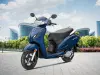
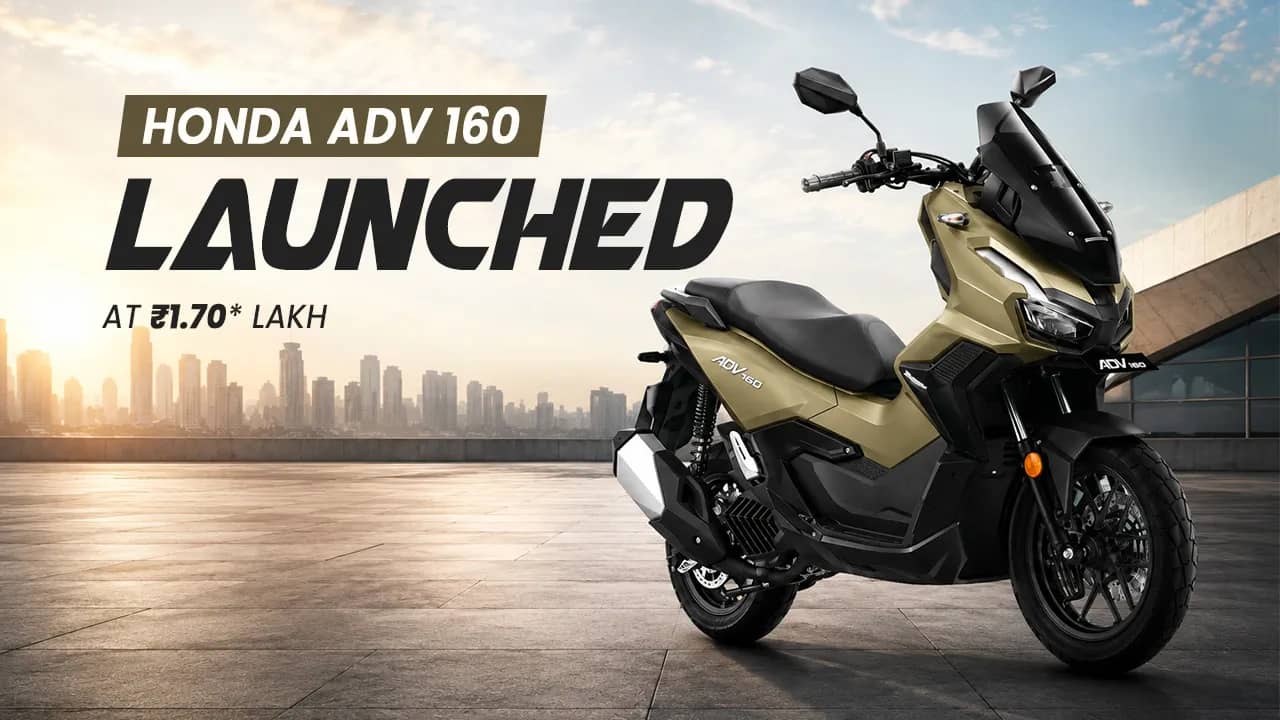
Honda has officially launched the ADV 160 in India at ₹1.70 lakh ex-showroom, making it the country's first flex-fuel-compatible scooter and the most powerful entrant in the maxi-scooter segment. Powered by a 156.9cc liquid-cooled engine producing 16.09bhp and 14.9Nm, it features front-and-rear disc brakes with dual-channel ABS, a TFT display with Honda RoadSync navigation, and 27-litre underseat storage. Priced above rivals like the Yamaha Aerox 155 and Hero Xoom 160, the ADV 160 targets buyers prioritizing performance and tech over outright value. It's available at Honda's Redwing and BigWing dealerships nationwide.
Honda has priced the ADV 160 at ₹1.70 lakh ex-showroom, and that single number changes the conversation around India's maxi-scooter segment overnight. The scooter goes on sale through Honda's Redwing and BigWing outlets, and it lands as the most expensive bike in a class it didn't even compete in a month ago. For a segment built around the Yamaha Aerox 155 and Hero Xoom 160, both priced well under ₹1.55 lakh, Honda has walked in and set a new ceiling.
What You Get for ₹1.70 Lakh
The ADV 160 runs a 156.9cc liquid-cooled single-cylinder engine, Honda's most powerful maxi-scooter unit for India, making 16.09bhp and 14.9Nm through a CVT gearbox. That's a real jump over the segment — the Xoom 160 tops out at 14.6bhp, the Aerox 155 hovers around similar numbers, and neither gets anywhere close to the ADV's torque figure. An idle stop-start system is standard, which matters more than it sounds on Delhi's stop-and-go traffic where a scooter can sit idling at signals for minutes at a stretch. Braking is handled by front and rear discs with dual-channel ABS, a setup the Xoom 160 doesn't offer — that bike still makes do with a rear drum.
Where Honda has clearly aimed to win is the tech sheet. A TFT display runs Honda RoadSync with turn-by-turn navigation, there's a USB charging port for the phone doing the navigating, and Honda's Selectable Torque Control adds a layer of safety on wet or loose surfaces that none of the immediate rivals match. The 27-litre underseat storage swallows a full-face helmet with room left over, which alone solves a daily annoyance for anyone who's tried cramming a lid into a regular scooter's boot.
Flex-Fuel Is the Bigger Story
Buried under the price headline is something more consequential for buyers: the ADV 160 is India's first flex-fuel-compatible scooter, running on blends up to E85. Right now that's mostly a future-proofing feature since E85 pumps are rare outside a handful of pilot cities, but as ethanol-blended fuel rolls out further, ADV 160 owners won't need to think twice about what's in the tank. It's the kind of decision that looks unremarkable in year one and smart by year three.
Honda ADV 160 vs the Competition
Here's where the ₹1.70 lakh tag starts to bite. Every direct rival costs less, some by a significant margin.
Honda is asking a premium of roughly ₹20,000 over the Aerox 155 and more than ₹40,000 over the Ntorq's top variant. The extra money buys the strongest engine in the class, front-and-rear disc ABS, and a design that leans harder into rugged, adventure-scooter styling than any of these city-focused rivals attempt. Whether that's worth it depends entirely on whether a buyer is cross-shopping on price or on what the scooter actually does better.
On-Road Price and What It Actually Costs to Run
In Delhi, factor in RTO registration and a comprehensive insurance policy and the ADV 160's on-road price lands closer to ₹1.93–1.95 lakh — a number worth checking against your own city before walking into a showroom, since road tax slabs shift state to state.
Finance it the standard way — 20% down payment and a 60-month loan at 11% interest — and the down payment works out to roughly ₹34,000, with EMIs of about ₹2,957 a month. That's a manageable number for a scooter positioned as a lifestyle purchase rather than a pure commuter, but it's still higher than what an Aerox or Xoom buyer would pay monthly for a similarly financed unit.
Running costs are where the picture gets more forgiving. Honda hasn't published a certified mileage figure yet, but scooters in this displacement and weight class typically return 35-40 kmpl in real-world city riding. At an expected 38 kmpl and today's petrol price of ₹103/litre, someone covering 1,000km a month — a fairly typical commuting load in a city like Delhi or Mumbai — would spend around ₹2,711 on fuel. Service costs at the 10,000km mark should land in the ₹3,500–4,000 range going by what Honda charges on its other premium scooters, though actual figures will only be confirmed once the first service cycle rolls around.
Should You Buy It or Wait?
The ADV 160 isn't trying to be the cheapest maxi-scooter in India, and Honda clearly knows it. It's positioned as the one with the strongest engine, the most complete safety kit, and styling that stands apart from the Aerox and Xoom's more conventional sport-scooter look. If those things matter more to you than saving ₹20,000-40,000 upfront, this is an easy recommendation — nothing else in the segment matches its spec sheet.
If budget is the deciding factor, the Xoom 160 or Aerox 155 will get most riders 90% of the experience for meaningfully less money, and the Ntorq 150 remains the value pick if flex-fuel compatibility and disc-disc ABS aren't priorities. For riders who've been waiting specifically for a proper adventure-styled scooter with the badge and backup network Honda brings, though, the wait is over. Check the on-road price and EMI for the Honda ADV 160 in your city on Drivio.
The Honda ADV 160 launches at ₹1.70 lakh, undercutting no rival but outpowering all of them with 16.09bhp and class-leading braking hardware. On-road pricing in Delhi lands near ₹1.93-1.95 lakh, with EMIs of roughly ₹2,957/month on standard financing terms. Fuel costs are expected around ₹2,711/month at typical usage. Against the Aerox 155, Xoom 160, Ntorq 150 and SR 175, it's the premium pick for riders wanting the strongest spec sheet and flex-fuel future-proofing, not the budget-conscious option in this segment.