Top Mileage-Focused Bikes for High-Running Commuters in India: Real Monthly Fuel Costs
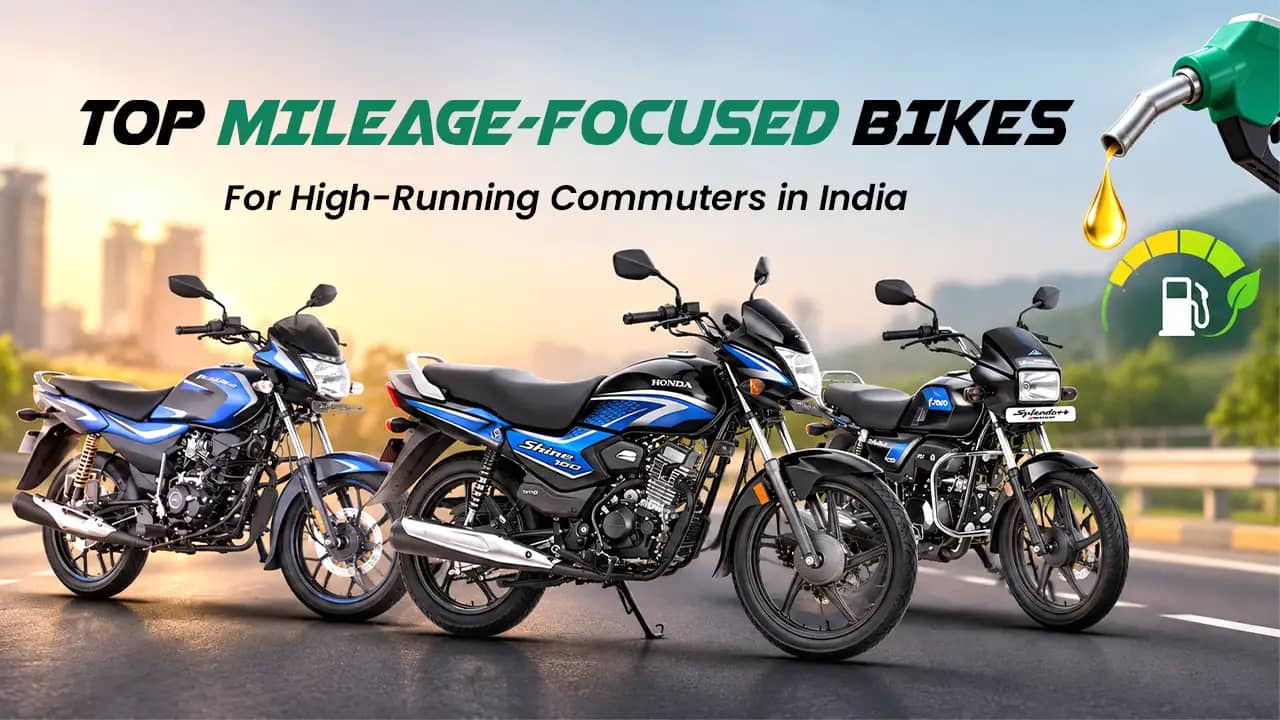
Overview
Riding 50 km a day makes fuel your biggest running cost. This guide compares the Bajaj Freedom 125 CNG, Hero Splendor Plus, Bajaj Platina 110 and Honda Shine 100 for riders in India who cover about 1,500 km a month. Ex-showroom prices start at ₹65,642, while monthly fuel bills run from roughly ₹1,213 to ₹2,641.
The smartest mileage-focused bikes for high-running commuters in India start at ₹65,642 ex-showroom for the Honda Shine 100 and top out near ₹1.1 lakh for the Bajaj Freedom 125 CNG, yet the lowest sticker price rarely gives the lowest bill. Ride 1,500 km a month, about 50 km a day, and a petrol commuter swallows roughly 24 litres. At ₹103 a litre that is ₹2,450 a month. Over four years the fuel alone costs about ₹1.18 lakh, more than the bike. So the real question is not which motorcycle is cheapest to buy, but which one makes the fuel cheaper.
Mileage-focused bikes compared: what 1,500 km a month really costs
The table below uses petrol at ₹103 a litre and CNG at about ₹76 a kg, an expected Delhi-level price, so check your local pump. Petrol bikes are run 10 per cent below their ARAI claims, a fair haircut for Indian traffic. The Freedom’s figure is Autocar India’s tested city number of 94 km/kg, not Bajaj’s 102 km/kg claim.
The three petrol bikes sit within ₹190 a month of each other. Choosing among them comes down to comfort, resale and upfront cost. The Freedom lands about ₹1,240 below the Splendor Plus every single month, a gap no amount of haggling at a showroom will match.
Hero Splendor Plus: the safe petrol pick
The Hero Splendor Plus costs ₹77,777 ex-showroom in Delhi and about ₹90,000 on-road once RTO and insurance are added. Its 97.2 cc engine makes 8.02 PS and 8.05 Nm, modest numbers that suit a 112 kg bike built for stop-start traffic. Hero backs it with a five-year or 70,000 km warranty, and the second figure matters to you. At 18,000 km a year you cross 70,000 km in roughly 3.9 years, so the cover lapses before the fifth birthday. Finance it with 20 per cent down over 60 months at 11 per cent and the EMI works out to about ₹1,566. Used Splendors sell in every town, which is where it earns its premium over the Platina and Shine.
Bajaj Platina 110 and Honda Shine 100: cheaper ways in
Bajaj’s Platina 110 is the better rider of the pair. The 115.45 cc engine makes 8.48 bhp, ground clearance is 200 mm, and the ES drum version costs around ₹70,000 ex-showroom, with the ABS variant closer to ₹79,800. Honda’s Shine 100 undercuts everything at ₹65,642, about ₹71,800 on-road in Delhi. At 99 kg it is 13 kg lighter than the Splendor, which you will notice every time you muscle it around a U-turn in a jam.
The price of that low entry shows up on bad roads. Ground clearance is 168 mm, 32 mm less than the Platina, and speed breakers that nobody levelled will find it. The TVS Radeon, claimed at roughly 73 kmpl, is worth a test ride before you commit to either. Readers of our earlier Splendor Plus and Shine 100 coverage will recognise the trade-off: Honda’s refinement against Hero’s resale.
The costs a fuel table hides
Ten thousand kilometres arrives in under seven months at this usage, so you will be at a service centre three or four times a year. Budget roughly ₹3,000 to ₹4,000 for those visits on any of the 100-110 cc bikes here, a likely figure rather than a quoted one, and expect a chain and sprocket set somewhere near 20,000 km. Bajaj claims the Freedom is up to 50 per cent cheaper to maintain than 125 cc petrol rivals, though the CNG kit adds checks at every service. Ask the dealer for that visit’s price before you sign.
Is a CNG bike worth it for daily running?
Yes, if you cover around 1,000 km a month or more and a CNG pump sits on your route. The Bajaj Freedom 125 CNG costs ₹91,566 to ₹1.11 lakh ex-showroom in Delhi, and the base drum lands near ₹1 lakh on-road. That is about ₹10,000 above a Splendor Plus. On the same loan terms its EMI is ₹1,740, only ₹174 a month more, while the fuel saving is ₹1,240. The saving is roughly seven times the extra EMI, and the ₹10,000 premium comes back in about eight months at 1,500 km a month. Ride 500 km a month instead and the same premium takes two years.
The 124.58 cc engine makes 9.5 PS and 9.7 Nm, more than any petrol bike in the table. The cost is bulk: 149 kg, an 825 mm seat and a top speed near 93 km/h. A 2 kg CNG tank covers about 190 km in the city, so a 50 km-a-day rider refills every third or fourth day. A 2-litre petrol reserve adds another 100 km or so when the pump queue is too long. Queues at CNG stations are the real running cost nobody prints on a brochure.
The verdict
Among mileage-focused bikes, the Freedom 125 CNG is the only one that changes the arithmetic rather than trimming it. If you ride 1,000 km or more a month and can reach a CNG pump without a detour, buy it. If you cannot, the Splendor Plus is the safer petrol choice, and the Shine 100 is the answer when the budget will not stretch past ₹75,000 on-road. CNG-pump density and RTO charges differ enough between cities to move the payback by a few months, so check the on-road price and EMI for the Bajaj Freedom 125 CNG in your city on Drivio.
The Freedom 125 CNG is the pick for anyone with a CNG pump on their route. It saves about ₹1,240 a month over the Splendor Plus, far more than its extra EMI. No CNG access? The Splendor Plus offers the safest resale and a five-year warranty. Working to a tight budget? Honda’s Shine 100 costs the least upfront and weighs only 99 kg.